Painting to Music: Strategies and Interventions for Incorporating Art in Music Therapy
After learning one of my adult clients loves painting, I knew I wanted to find a way to incorporate it in our sessions. Initially scared of making a mess, I took some time to consider what materials were needed and how to best pair painting with music to support my client’s goals of increasing autonomy with choice making opportunities, developing coping skills to reduce anxiety, and self-expression.
Art paired with music can be an incredibly effective multisensory medium especially for self-expression and grounding. Unlike board-certified art therapists, interpreting the meaning of a client's creation is not within a music therapist’s scope of practice. However, there are so many ways to incorporate art with music to support client goals. Here are some ideas, prompts, and tips for you to try painting in sessions!
Setting Up:
Before paint even comes into the picture, it is important to prepare the environment to prevent any unwanted messes.
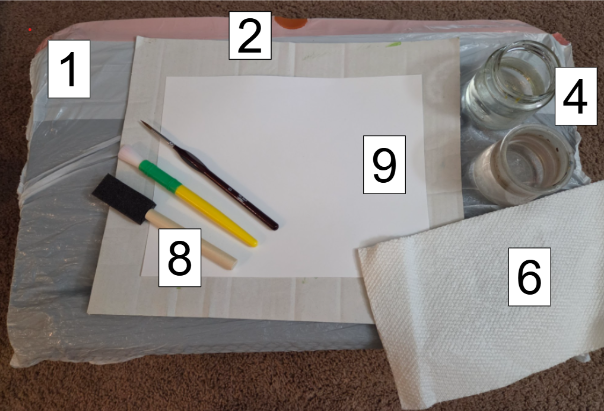
First layer- Place a garbage bag, newspaper, towel, parchment paper or similar item on the flat surface.
Second Layer (optional)- Put down a piece of cardboard that is slightly larger than the paint paper.
Gloves (optional)- Consider bringing gloves if your client may have a difficult time thoroughly washing hands to remove paint or prevent any potential skin irritation from the paint.
Water Cups- Use 2 cups of water. Swirl the used brush in the 1st cup to get the majority of the paint off. Dip in the 2nd cup to get the remaining paint off. The 2nd cup should remain fairly clear which prevents unwanted color mixing when using a new paint color.
Paper or Styrofoam Plate- Use as a large paint palette that is easily disposable. The extra room can help prevent unwanted color mixing.
Paper Towels- Have on standby in case of any spills.
Picking Paint and Supplies:
Paint- The paint used will vary based on the activity and medium you are painting on. I have had the most success with water colors and water based acrylic paints. Avoid oil paints or varnishes as they are more difficult to clean.
Paint brushes- Depending on your client’s fine motor abilities will greatly impact your paint brush choice. Just like adaptive mallets, using brushes with thicker handles will be easier to use. Other options include sponge brushes or finger painting.
Paper- Use mixed media paper for the most versatile paper. Standard printer paper and stockpaper may start to break apart when the paper becomes too wet.
Prompts for Painting to Music:
After setting up, play live or recorded client preferred music and provide a directional prompt for some structure to painting.Some example painting prompts include:
What images come to mind when you listen to this song?
Paint along to the music’s rhythmic beat, dynamics, and/or tempo.
What colors represent how the song makes you feel?
Create a new album cover.
Below are some more painting to music interventions.
Ocean Drum Painting
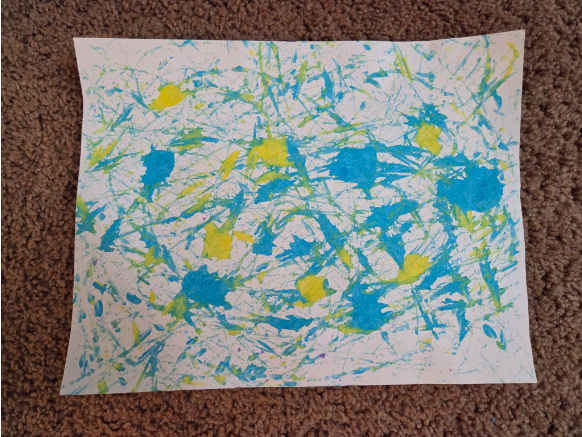
Place a piece of paper on the bottom of a cardboard box and ask the client what colors they'd prefer to use to represent an artist, song, or album and add a few drops of paint on different parts of the page. Add some marbles and prompt the client to tilt the box to move the marbles along with the music. The marbles will spread the paint across the page, creating an abstract painting.
Song Scrapbook
Create a scrapbook with all of the client's paintings! Prompt them to name their creation. This could be an emotion, a song name, artist, emotion, or something else! Sign and date it at and add it to a binder for your client to keep and continue to add to!
Decorating DIY Instruments
Creating and decorating your own instrument can make future active music making extra special and personalized. Plus, these are very accessible items most people have at home.
1. Shakers- use rice or dried corn into a medicine bottle or water bottle. Seal with glue or tape for extra protection. Clients can choose how much to fill the bottle and decorate it with stickers, paint, or markers.
2. Rubber band and tissue box guitar- Using an empty tissue box, secure 4-6 rubber bands lengthwise to strum.Client can decorate and play their tissue box guitar in future sessions.
You should always try out your activity before bringing supplies to sessions. This will give you a better idea of what to expect, predict potential problems, and create solutions to make the process go as smoothly as possible. Although these ideas are tailored towards adults, these activities can be adapted for pediatric clients too. Happy painting!
Resources:
5 ways to use Creative Arts in music therapy. MusicWorx. (2019, August 14). https://musicworxinc.com/2021/06/21/5-ways-to-use-creative-arts-in-music-therapy/
Becoming an Art Therapist. American Art Therapy Association. (2025, July 2). https://arttherapy.org/becoming-art-therapist
Bowden, T. (2024, May 24). Brushing away stress: 21 art therapy activities for self-expression and healing. Rocky Mountain College of Art + Design. https://www.rmcad.edu/blog/brushing-away-stress-21-art-therapy-activities-for-self-expression-and-healing/
Mehlomakulu, C. (2017, May 27). Music and mindful art. Creativity in Therapy. https://creativityintherapy.com/2017/05/music-mindful-art/